Key takeaways
The Australian Personal Watercraft market has three major manufacturers: Sea-Doo (value and features), Yamaha (longevity and refinement) and Kawasaki (raw power and speed).
True ownership cost goes beyond the showroom sticker price: Factor in ongoing expenses like trailers, state-specific registration fees, high-performance hull insurance, and annual servicing.
Average costs depend on whether you choose a new or used model. New skis typically cost $10,000 – $35,000+. Pre-owned models typically cost $2,500 – $8,000, depending on brand and condition.
“I wish I didn’t own a jet ski”…. said no one ever.
Buying your first jet ski is a huge milestone, but knowing when, where and how to get started can be confusing.
Spend time in a showroom or browse online listings and it’s easy to feel overwhelmed by specs, hull materials, and power options – and that’s before you even compare prices.
To make it easy to hit the open water with confidence, we’ll cover every important jet ski buying tip – including costs, legal stuff, purchasing info and financing options so that you can make an informed, confident decision.
First things first: Let’s clear up a bit of terminology.
The term ‘Jet Ski’ is actually a brand name owned by Kawasaki. The technical term on registration papers is Personal Watercraft (or PWC).
The Australian PWC market explained
The Australian PWC market is a battle between the ‘Big Three’.
- Sea-Doo
- Yamaha’s WaveRunners
- Kawasaki’s Jet Skis
Each brand has its own personality, design, and advantages.
Sea-Doo
Known for value and features
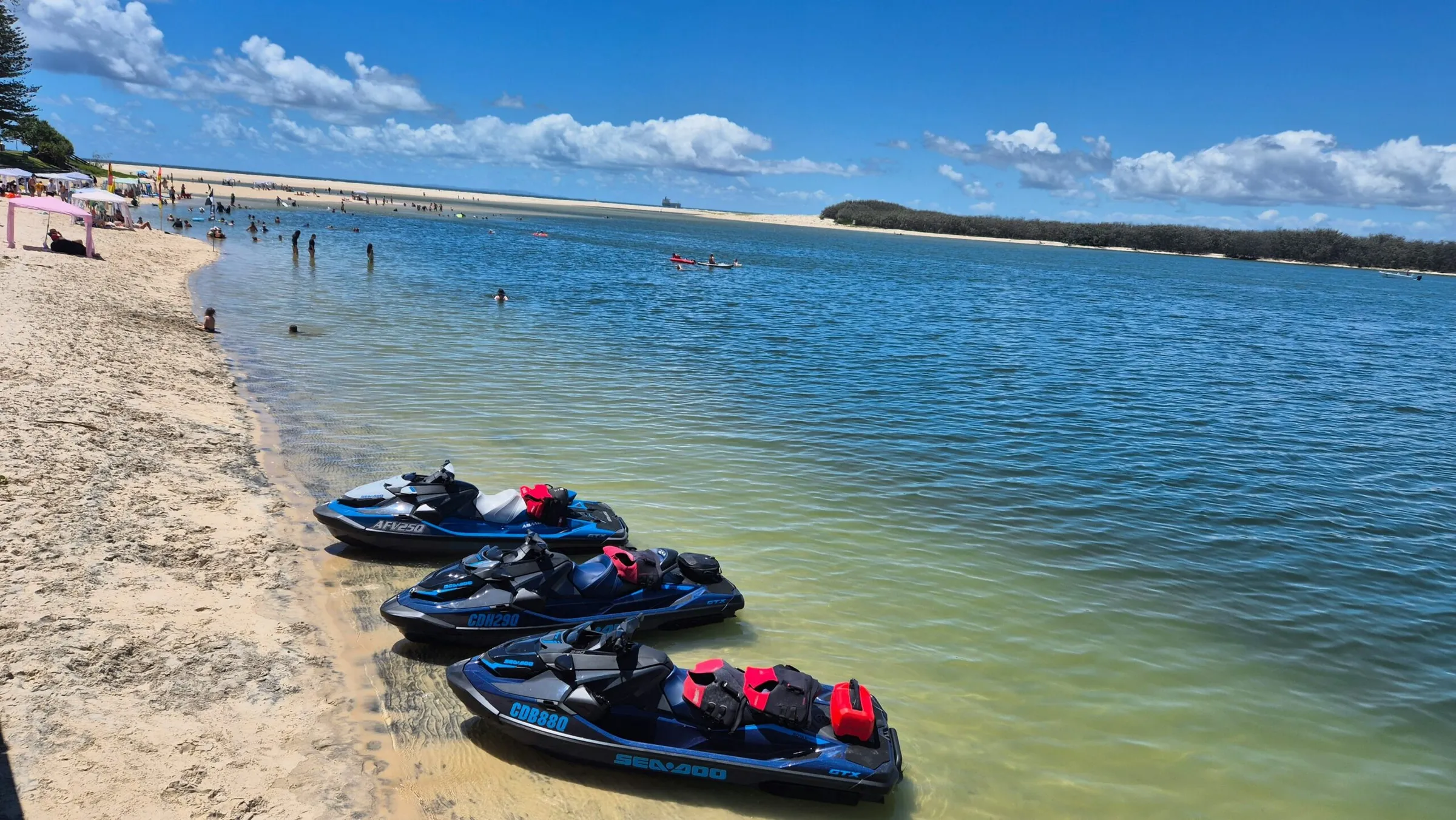
Sea-Doo is Australia’s market leader with 75% share. Their skis are packed with user-friendly features, from the LinQ cargo system (which allows you to quickly attach coolers, storage boxes, or fishing rod holders) to smart braking systems (iBR) and immersive Bluetooth speakers. Sea-Doo leans heavily into lifestyle design, so there is a range of models tailored to specific activities (like recreation, touring, or fishing), usually at competitive prices.
Yamaha
Known for longevity and refinement
Yamaha’s reputation is built around its legendary engine durability (1.8L and 1.9L marine engines), fuel efficiency and range, and high-tech, lightweight NanoXcel hulls. WaveRunners are famous for holding their resale value and delivering a predictable, rock-solid ride. They’re also known for the iconic trademarked spout of water that shoots from the rear, which is pretty cool.
Kawasaki
Known for heavy-duty reliability and power
Kawasaki skis pioneered the stand-up model with the brand name ‘Jet Ski’ becoming the universal term for all personal watercraft. Jet Skis are known for their raw power and speed, durable hulls, and rough-water handling. Their deep V-hull designs cut through ocean chop as a high-performance machine built for riders who want uncompromising stability and massive acceleration.
How much does a Personal Watercraft cost?
Personal Watercraft pricing tiers generally range from $10,000 to over $35,000 for a new ski, depending on the engine, size, and features.
A breakdown of the three main pricing tiers and their features includes:
Entry level / recreational
Price range: $10,000 – $18,000
Features: Lightweight hulls, fuel-efficient engines (60-90 horsepower), and simple two or three-seater options. Agile, great for beginners, easy to tow with a small car, and perfect for calm lakes or river cruising.
Typical models: Sea-Doo Spark, Yamaha EX
Mid-range / all-rounder
Price range: $15,000 – $25,000
Features: Mid-range models give you larger, more stable hulls suited to choppy water. Expect room for three riders, plenty of storage, and engine sizes ranging from 130 to 170 horsepower, making them ideal for towing a tube or wakeboarding.
Typical models: Sea-Doo GTI, Yamaha VX, Kawasaki STX 160 Series
Premium / performance
Price range: $30,000+
Features: Supercharged premium skis (300 to over 325 horsepower) offer top-tier comfort, cutting-edge technology, luxury seating, and speeds over 110 km/h, but they can burn through premium fuel quickly.
Typical models: Sea-Doo RXP-X 325 / GTX Limited, Yamaha FX SVHO, Kawasaki Ultra 310 Series
FIDO SAYS: The average cost of a PWC varies depending on whether you choose a new or used model. New skis can cost anywhere from $10,000 to $35,000. Pre-owned models can cost around $2,500 to $8,000 depending on the brand and condition.
Crucial hidden costs most first-time buyers forget
When working out your PWC budget, you’ll need to consider more than just the upfront price tag.
Additional costs can also include:
☐ Ski trailer ($2,000 – $4,500): A ski isn’t much use without wheels to transport it to the water. There are plenty of trailer options (new and used), but remember that saltwater is a trailer killer and cheap steel rusts quickly.
☐ Registration fees ($100 to $499): State governments love a registration fee, but they don’t all agree on the price. NSW ($499) and SA ($409) hit PWC owners with significantly higher rego fees than QLD ($122) and VIC ($101.70), which don’t sting the pocket as much.
☐ Insurance ($500 – $1,500): Hull damage from an accidental grounding or a third-party liability claim can be costly. Annual insurance costs vary depending on your age, experience, and ski specs (higher-performance models cost more to repair, so premiums go up).
☐ Maintenance ($200 – $750): Skis typically require a full professional service every 12 months or 100 hours (whichever comes first). A basic ski logbook service will cost less than servicing a premium model with a high-horsepower engine.
☐ Extended warranty ($800 – $1,500): The exact price of a PWC warranty depends on brand, term length (1 to 5 years), and whether you purchased through a dealer or private seller.
Navigating state-by-state licensing rules
In Australia, PWC licensing requirements vary by state.
Every state requires you to hold a specific PWC licence or endorsement (this is an add-on to a standard boat license), so you’ll normally need to get your boat license before you can hit the water on your ski.
Specific licensing rules for each state:
New South Wales (Transport for NSW): You must hold a valid NSW General Boat Driving Licence and pass a specific PWC Upgrade Knowledge Test (15 multiple-choice questions).
Victoria (Safe Transport Victoria): You must hold a standard marine license and then sit a specific PWC endorsement test.
Queensland (Maritime Safety Queensland): You must hold a Recreational Marine Driver License (RMDL) or equivalent, then complete a competency-based PWC training course and practical assessment.
South Australia (Marine Safety SA): You must hold a current Boat Operator’s Licence to operate a personal watercraft. There is no separate jet ski licence.
Western Australia (Department of Transport): WA uses the Recreational Skipper’s Ticket (RST). Unlike in the eastern states, a standard RST covers all recreational vessels, including PWCs.
Tasmania (Marine and Safety Tasmania): Tassie requires you to hold a motorboat license and complete a PWC Practical Course to get your PWC endorsement.
Northern Territory: The NT is currently the only jurisdiction in Australia with no mandatory recreational boating or PWC license.
FIDO SAYS: Towing someone (wakeboarding/tubing) almost always requires the ski driver to hold a full, unrestricted PWC license. Most states allow teenagers aged 14 to 16 to apply for restricted licenses that prohibit riding at night or towing.
How to figure out which style of PWC suits you best
How do you plan to use your ski?
And don’t say “on the water”.
Knowing what you want from your purchase can help you find the right jet ski riding style and model for your environment, your mates, and your time on the water.
Beginner/recreational
Think about something lightweight, stable and with manageable power. Entry-level poly-hull models are agile and easier for newcomers learning how to handle a PWC at low speed.
Popular with beginners: Sea-Doo Spark | Yamaha EX
Family/all-rounder
Families typically need stability, storage space for lunch, and a hull that won’t flip over when multiple people climb on it while in the water. Three-seater platforms with a medium-to-large hull tick all these boxes, often with dedicated tow hooks for tubing, extra fuel capacity for long days and storage for towels and sunscreen.
Popular with families: Sea-Doo GTI | Yamaha FX Cruiser
Fishing enthusiasts
Instead of buying a generic model and strapping a milk crate to the back for storage, consider turnkey fishing ski setups that come with heavy-duty mounting brackets, integrated marine GPS devices, live wells for bait, and swivel seats that let you turn around and manage your fishing rods without tipping over.
Popular with fishing enthusiasts: Sea-Doo Fish Pro Trophy | Kawasaki Ultra Angler
FIDO SAYS: Unsure about what size ski to get? A three-person ski might still be a good fit for a solo rider because you can board in deep water, stay drier in rough chop, and have the legal freedom to tow a rider if you need to.
The real differences between buying a new or used ski
Whether you’re going to the showroom for a brand new model or hunting for bargains on the secondhand market, choosing between a new or used ski should be about more than a price tag.
A new ski offers peace of mind with a manufacturer’s warranty and zero wear and tear, but it will cost you (sometimes significantly) more.
A used ski can save you thousands of dollars upfront, making it ideal for beginners learning the ropes or casual riders, but you inherit an engine that may have seen better days.
Let’s compare options.
Buying new
| Pros | Cons |
|---|---|
Warranty: Manufacturer’s backing offers peace of mind against early mechanical failures. | Price: Significantly higher upfront cost or larger loan required to clear the showroom floor. |
Condition: The hull has no hidden stress cracks, and the engine has zero hours of saltwater exposure. | Depreciation: A new PWC loses a chunk of its market value the second you leave the dealership. |
Technology: Access the newest hull designs, smart braking systems, and top-tier fuel efficiency. | Servicing: Requires a mandatory 10-hour or 20-hour dealer service to maintain warranty coverage. |
Buying used
| Pros | Cons |
|---|---|
Value: You can often purchase a larger hull model for the price of a bare-bones entry-level showroom ski. | Maintenance history: You inherit the previous owner’s flushing and servicing habits, as well as saltwater corrosion. |
Less depreciation: The previous owner takes the financial hit of steep depreciation. | No warranty: Private sales carry risk, as there’s generally no safety net if the engine experiences a major failure. |
Extras: Used listings may include accessories like fitted covers or life jackets in the package price. | Older technology: You miss out on the latest hull material innovations and modern features. |
What to look for when inspecting a pre-loved machine
- Check engine hours: Aim for around 20–30 hours of use per year. A five-year-old ski with only 5 hours can actually be a red flag, meaning it sat in a garage with stale fuel and drying seals.
- Inspect the impeller and wear ring: Look into the jet pump intake under the ski. The metal impeller blades should be smooth. If they’re nicked or bent from sucking up rocks and gravel, you’re looking at an immediate repair bill.
- Look for stress cracks: Inspect the hull, particularly underneath near the bunks. Hairline stress fractures or deep gouges through the gel coat indicate hard landings or rough beach groundings.
- Request service history: No receipts? No deal. Look for stamped logbooks from authorised marine mechanics proving regular saltwater flushes and oil changes.
Equipment priority list for first-time owners
It’s easy to get swept up in the excitement of a dealership showroom and walk out with every accessory attached to your invoice.
To avoid overspending, it can be helpful to prioritise the gear that keeps you safe and compliant on the water vs. cosmetic upgrades that can be fun but are more about looking good.
| ✅ Must-haves | 👍 Nice-to-haves |
|---|---|
High-quality trailer | GPS units |
Towing rope | Bluetooth speakers |
Sand anchor | Depth finder (if fishing) |
Flush kit for engine maintenance | Snap-in storage coolers |
Life jackets (PFDs) for all passengers | Custom-fitted UV covers |
Deciding between an authorised dealer and a private seller
Choosing between an authorised dealer and a private seller comes down to finding the balance between your budget and your risk tolerance.
Authorised dealerships
Authorised dealers offer warranties and buyer protection. When you buy from a showroom, you’re protected by Australian Consumer Law. You also get access to structured pre-delivery inspections (PDI), and factory-trained technicians.
FIDO SAYS: Keep an eye out for “near-new” demo models. Dealerships regularly run floor stock for customer test days. These skis often carry minimal hours, include a full new-ski warranty, and may be priced thousands of dollars below a brand-new model.
Private sales
Private sellers typically offer lower prices and greater room for negotiation. However, dealing with the person who rode the ski before you comes with a higher risk, as there’s no warranty if something goes wrong. If you’re dropping cash on a private sale, hiring a mobile marine surveyor or paying a local dealer to run an engine diagnostic can help bring peace of mind before you transfer funds.
Jet ski financing
While purchasing a ski outright avoids a long-term debt commitment, it requires significant capital.
A structured jet ski loan preserves your savings buffer and introduces ongoing fixed repayment obligations instead.
Choosing to finance means you will incur interest costs and loan management fees over time, which substantially increases the total amount paid for the watercraft.
However, secured marine finance options use your watercraft as collateral, which can occasionally unlock more favourable interest rates compared to entirely unsecured personal loans, depending on your credit history.
Ready to get started?
Get a fast, obligation-free finance quote from an award-winning Fido Finance broker today.
Speak with the experts at Fido Finance today
Navigating the journey from budget spreadsheets and licensing tests to finally choosing your watercraft can feel like a lengthy process, but a little planning helps ensure you won’t experience buyer’s remorse on the boat ramp.
At the end of the day, the “best” jet ski isn’t the most expensive or the fastest model – it’s the one that aligns with your budget, lifestyle, and the local water conditions you plan to ride in.
At Fido Finance, we make it easy to take control of your lifestyle goals and plan for what’s next. If you’re ready to learn more about jet ski loans and discuss whether financing is suitable for your circumstances, speak to the award-winning team at Fido Finance today.
Contact our team on 13 FIDO (13 34 36) or get in touch online for an obligation-free consultation.
Fido Finance Pty Ltd | Australian Credit Licence 523478.
Jet ski and marine finance options are subject to a broker’s baseline assessment and final formal approval from panel lenders based on verified capacity, credit health, and lending parameters. Interest rates vary significantly depending on asset condition (new vs. used), security type, and individual credit history. Not all consumers will qualify, and approval is not guaranteed. Borrowing for discretionary leisure products introduces ongoing financial commitments. This guide offers general market commentary only and does not constitute formal personal financial advice. Ensure you review the credit contract and fee schedule completely prior to signing.
IMPORTANT: Financing Risks
Before committing to jet ski financing, you should understand that:
- Jet ski financing is a secured loan where your watercraft is security. If you cannot meet repayments, your lender may repossess the vessel.
- Interest costs and fees will significantly increase the total amount you repay beyond the purchase price.
- Depreciation is rapid – a new jet ski loses substantial value immediately after purchase.
- You remain liable for the full loan amount even if the watercraft is damaged, lost, or becomes uneconomical to operate.
- Ongoing costs (insurance, maintenance, registration, storage) may exceed your budget expectations and increase financial stress.